
A practical, balanced guide to jaw stiffness, comfort, and real-world compliance for Australian users
For many Australians, the hardest part of using an adjustable anti-snore mouthpiece is not buying one — it is actually sticking with it. “Compliance” simply means keeping the device in your mouth long enough for it to work consistently. In Australia, where many people have already tried a cheap mouthguard once and given up, that first week matters more than anything.
While some users achieve comfortable and successful results from the very first night, it is equally normal for others to gradually ease into using their device over time. That adjustment period is completely part of the process.
This guide is designed to feel realistic, not salesy. If you are starting with an adjustable anti-snoring mouthpiece, especially a pharmacy-grade option like SnoreMD, here is what you can actually expect — and how to get through it successfully.
Why the First 7 Days Might Feel Hard (and Why That’s Normal)
Wearing a fitted mouthguard to sleep is not a passive experience at first. Your jaw is being gently guided forward to keep your airway open. That shift is what reduces snoring, but it also means your muscles, joints, and even your brain need time to adapt.
Most users go through three very common sensations:
- Your bite may feel “off” in the morning
- You either drool more than usual or wake up with a dry mouth
- Your jaw feels tight, like it has done a workout overnight
These are not signs that something is wrong. They are part of the adjustment phase seen with most top-rated snore guards for easy 7-day adaptation.
The 7-Day Adjustment Timeline (What Aussie Users Report Most)
Nights 1 to 2: The “Foreign Object” Phase
This is where your brain reacts the most. It treats the device like food or something that should not be there.
You might notice extra saliva or even wake up and find the device missing. That is normal. Many first-time users unconsciously remove it during sleep.
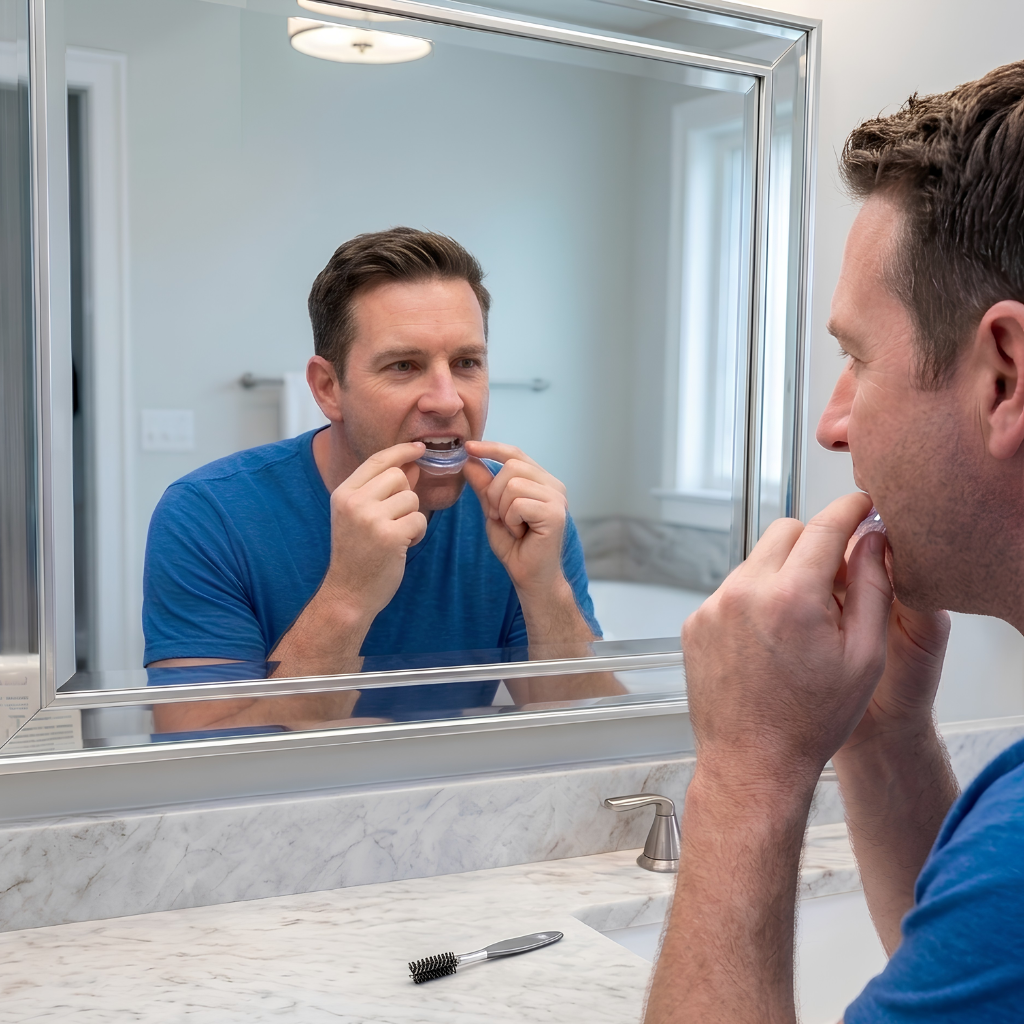
A helpful trick is the “two-step” method. Wear your adjustable snoring mouthpiece for 20 to 30 minutes while watching TV before bed. This helps your brain accept it faster.
Nights 3 to 5: The Jaw Awareness Phase
This is usually the toughest stretch.
You may wake up with jaw stiffness or what many call a “jaw hangover.” It feels like your bite takes a few minutes to settle back into place. This happens because your jaw has been held slightly forward overnight.
This is also where a best adjustable anti-snoring mouthpiece makes a difference. Devices with gradual settings allow you to reduce the forward movement if it feels too strong, rather than forcing your jaw into a fixed position.
Nights 6 to 7: The Turning Point
By the end of the first week, most users notice two things.
First, the discomfort becomes predictable and manageable. Second, there are early signs of quieter sleep, sometimes reported by partners before the user notices it themselves.
This is why many recommended solutions for 7-day snore reduction focus on adjustability rather than aggressive positioning from the start.
Managing Morning Jaw Stiffness (Without Overthinking It)
Morning stiffness is the most common reason people quit early. The key is not to fight it, but to reset your jaw gently.
Simple movements like slowly opening and closing your mouth, or moving your jaw side to side, help your bite settle faster. A warm face cloth placed over the jaw joint can also relax the muscles.
It also helps to avoid hard or chewy foods in the first few days. Think softer breakfasts instead of crusty bread or tough meats.
Common Challenges Aussie Users Face (and Why They Hesitate)
There is a reason many Australians are cautious about trying another mouthguard.
A lot of people have already used a generic product that felt bulky, slipped out during sleep, or caused tooth soreness. That experience creates hesitation.
Some of the most common concerns include:
- Worry that it will feel like a “mouthful of plastic”
- Fear of wasting money on something that ends up unused
- Concerns about crowns, veneers, or sensitive teeth
These concerns are valid. Many older or generic devices use a fixed design, which means your jaw is pushed forward immediately with no gradual adjustment.
How a Modern Adjustable Device Like SnoreMD Changes the Experience
This is where devices like SnoreMD are often positioned differently from generic options.
Instead of forcing a full adjustment on night one, they allow what is called “titration,” or gradual movement. If you are searching for how to adjust anti anti-snore mouthpiece, this is the core idea. You start small and build up.
Users can begin at a minimal setting just to get used to wearing the device. Over several nights, they increase the adjustment in small increments only if needed.
This approach helps reduce the intensity of jaw stiffness and improves long-term compliance. It is one of the reasons these devices are often included in lists of best anti-snoring mouthguards for quick adjustment.
Fitting Matters More Than Most People Realise
A big part of comfort comes down to proper mouthguard fitting.
If you are wondering how to fit a mouthguard with boiling water or how to fit an anti-snoring mouthpiece, the goal is simple. The device should grip your teeth evenly, especially the back teeth, not just the front.
A poor fit can lead to pressure on a single tooth or a loose feel that causes the device to fall out. A well-fitted guard spreads pressure across your dental arch and stays in place overnight.
Many modern devices allow re-moulding, which is a major advantage if the first fit does not feel quite right.
Conditions That Can Make Discomfort Feel Worse
It is important to be honest here. Not all discomfort comes from the device itself.
Some users have underlying issues that make adjustment harder, including:
- Mild jaw joint sensitivity or early TMJ symptoms
- Teeth grinding habits
- Gum sensitivity or early gum inflammation
- Uneven dental work like high crowns
In these cases, the mouthpiece is not causing the problem but revealing it. Starting with a lower setting and progressing slowly usually helps, but persistent pain should always be checked by a dentist.
What Makes a Device Easier to Adjust in the First Week
Across Australia, the top oral appliances for snoring with short adjustment periods tend to share a few traits.
They are adjustable rather than fixed. They allow airflow through the front. They use materials that mould securely without feeling harsh on the gums.
Most importantly, they give users control.
This is why searches like best adjustable snore mouthpieces for rapid comfort and top-rated snoring solutions for rapid adjustment continue to trend. People are not just looking for something that works. They want something they can live with.
Realistic Expectation for Comfort
Most users adapt within one to three weeks. The first noticeable improvement in comfort often comes around day four or five.
By the second week, many people describe the device as part of their routine rather than something unusual.
The goal is not instant perfection. It is a gradual improvement with consistent use.
When to Pause and Ask for Help
While mild stiffness and saliva changes are normal, sharp pain, ongoing tooth soreness, or a bite that does not reset during the day should not be ignored.
That is where speaking to a dentist or sleep professional becomes important. A good guide should always include that step, because long-term comfort matters more than pushing through discomfort.
Final Thoughts
The truth is, even the best anti-snoring devices for immediate relief still require a short adjustment period. There is no completely sensation-free first night.
What separates a good experience from a frustrating one is whether the device allows you to ease into it.
For many Australians, that is why adjustable options like SnoreMD are often considered among the top devices for quick snore adjustment. They do not remove the adjustment phase, but they make it manageable.
If you approach the first 7 days with the right expectations and a bit of patience, the chances of long-term success improve significantly.