
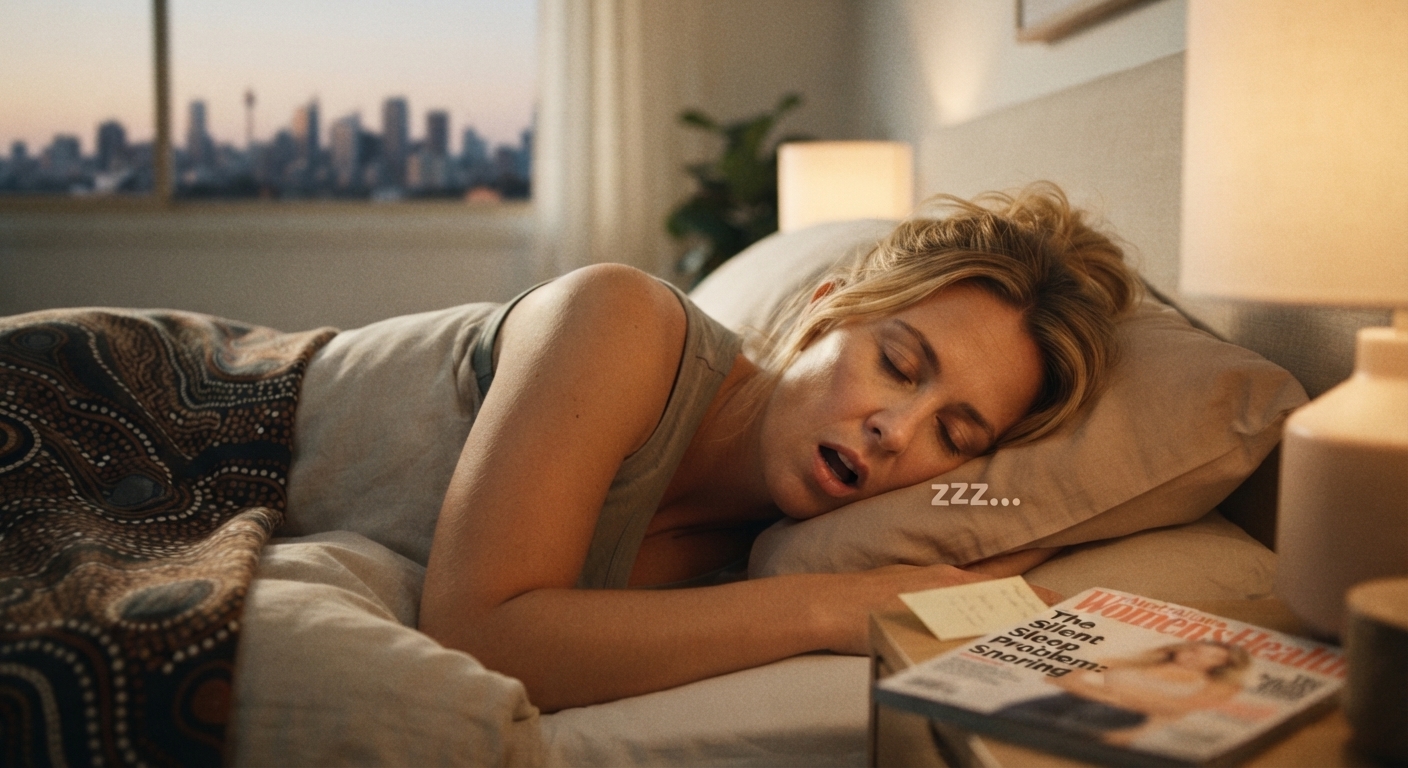
Why women may start snoring in their 30s, during pregnancy or after menopause, and what can help
Snoring is often thought of as a man’s problem, but Australian women snore too. In fact, the Sleep Health Foundation reports that around 30% of women experience at least mild snoring on some nights, compared with around 40% of men. Snoring is also particularly common in middle age.
For some women, snoring begins unexpectedly during pregnancy. For others, it becomes noticeable in their late 30s or 40s, during perimenopause, or after menopause. Nasal congestion, sleeping position, alcohol, changes in body weight and hormonal changes can all contribute.
Yet snoring can be an uncomfortable subject. Some women worry that admitting they snore will make them seem older, less attractive or unhealthy. Others simply assume that occasional snoring is something they have to put up with.
It doesn’t have to be an embarrassing conversation.
Snoring is common, it can have many possible causes, and persistent or heavy snoring is worth discussing with a General Practitioner(GP), particularly if there are other symptoms that could indicate obstructive sleep apnoea (OSA).
This guide explains what causes snoring in women, why women may start snoring as they get older, whether it is normal for pregnant women to snore, how to reduce snoring naturally, and how oral appliances such as SnoreMD may help with primary snoring.
Quick answers about snoring in women
| Common question | Short answer |
| How common is snoring in women? | Around 30% of women experience at least mild snoring on some nights, according to the Sleep Health Foundation. |
| Do women snore less than men? | Generally, yes. Around 30% of women versus 40% of men report at least mild snoring on some nights. |
| Why do women start snoring as they get older? | Ageing, changes in body composition and hormonal changes around menopause can increase the risk of sleep-disordered breathing and snoring. |
| Is it normal for pregnant women to snore? | Snoring can develop or become more noticeable during pregnancy. Persistent or loud snoring, particularly with other symptoms, should be discussed with a healthcare professional. |
| Do anti-snoring mouthpieces work? | Oral appliances can reduce primary snoring in appropriate adults. Clinical guidelines recommend oral appliance therapy for adults seeking treatment for primary snoring. |
| Does SnoreMD work? | SnoreMD is designed as an adjustable mandibular advancement device to help reduce primary snoring by positioning the lower jaw forward. Individual results vary. |
Why some Australian women feel embarrassed about snoring
Snoring may seem like a minor annoyance, but it can affect how a woman feels about herself and her relationships.
A woman may worry about disturbing her partner, sharing a hotel room, going on holidays with friends or sleeping around other people. If snoring begins during a period of hormonal or body changes, she may also wonder whether it is simply something she should accept.
There is another reason women should feel comfortable raising the subject: snoring can sometimes be a sign of obstructive sleep apnoea or another sleep-related breathing problem.
Research has found that women with sleep-disordered breathing can be underdiagnosed and undertreated compared with men. Women may also report symptoms such as fatigue, insomnia, morning headaches or poor sleep rather than describing loud snoring or witnessed breathing pauses.
That does not mean every woman who snores has sleep apnoea. Most snoring is not automatically a sign of OSA.
The important message is that snoring is a health conversation, not a personal flaw.
How common is snoring in Australian women?
The Sleep Health Foundation estimates that approximately 30% of women have at least mild snoring on some nights, compared with approximately 40% of men. About 15% of people are reported to snore on most nights. Middle-aged people are the age group most at risk.
This means that snoring among women is not unusual.
Do women snore less than men?
Overall, yes. Men have a higher risk of snoring than women. However, the difference changes with age and reproductive status.
Research into sleep-disordered breathing has found that menopause is associated with an increased likelihood of sleep-disordered breathing. One population-based study found that postmenopausal women had substantially higher odds of sleep-disordered breathing than premenopausal women, even after accounting for other factors.
So while women generally do not snore more than men overall, the gap can become considerably smaller as women move through menopause.
What causes snoring in women?
Snoring occurs when relaxed tissues in the upper airway vibrate as air moves through the narrowed airway during sleep. Several factors can contribute to this narrowing.
1. Hormonal changes
Hormones appear to play a role in women’s airway stability during sleep.
Research involving middle-aged women has found associations between lower levels of oestrogen and progesterone and a greater likelihood of snoring and sleep-disordered breathing symptoms.
This may help explain why some women notice changes in their sleep and snoring during perimenopause and menopause.
Why do I start snoring in my late 30s?
There is no single age at which women suddenly start snoring.
If snoring begins in the late 30s or early 40s, several factors may be involved, including:
- Changes in hormone levels.
- Changes in body composition.
- Nasal congestion or allergies.
- Alcohol consumption.
- Sleeping position.
- Changes in airway anatomy or muscle tone.
- Developing sleep-disordered breathing.
Perimenopause can begin before the final menstrual period, so hormonal changes may occur well before menopause itself. However, starting to snore in your late 30s does not automatically mean that perimenopause is the cause.
Persistent or newly developed snoring should be considered in the context of your overall health and other symptoms.
Why do women snore as they get older?
Snoring becomes more common with age, and the menopause transition is an important factor in women’s risk of sleep-disordered breathing.
Changes in hormone levels, body composition and upper-airway physiology may contribute.
This is one reason a woman who has never been a snorer may notice a change during midlife.
However, age alone does not explain every case. Weight changes, nasal congestion, alcohol, medications and sleep position can also influence snoring.
Is it normal for pregnant women to snore?
Yes, snoring can occur during pregnancy, including in women who did not snore before becoming pregnant.
Pregnancy-related changes can affect the upper airway and breathing during sleep. Research has found that habitual snoring can occur during pregnancy, while clinical reviews identify pregnancy as a period when women can have an increased risk of sleep-disordered breathing.
Why do pregnant women snore so much?
Several pregnancy-related changes may contribute, including:
- Nasal congestion and swelling.
- Hormonal changes.
- Increased blood volume.
- Changes in body weight.
- Changes to the upper airway.
- Existing risk factors becoming more noticeable during pregnancy.
Not every pregnant woman who snores has sleep apnoea.
However, loud or persistent snoring during pregnancy should not simply be dismissed, particularly when accompanied by witnessed breathing pauses, gasping, significant daytime sleepiness or high blood pressure. Sleep-disordered breathing during pregnancy can require medical assessment.
If you are pregnant and concerned about new or worsening snoring, speak with your GP, midwife or obstetric care provider.
Can allergies make snoring worse?
Yes.
A blocked nose can encourage mouth breathing, which can increase the likelihood of snoring. The Sleep Health Foundation identifies blocked nasal passages and mouth breathing as factors that can increase snoring.
For Australian women, seasonal allergies may therefore be an important consideration when snoring suddenly becomes worse.
Possible contributors include:
- Hay fever and pollen.
- Dust mites.
- Pet allergens.
- Mould.
- Other causes of nasal congestion.
If your snoring is noticeably worse when your nose is blocked, managing the underlying nasal symptoms may help.
What causes heavy or excessive snoring in women?
Occasional light snoring is different from loud, persistent or disruptive snoring.
Possible contributors include:
| Possible cause | Why it can matter |
| Sleeping on your back | The tongue and other soft tissues can move towards the back of the airway. |
| Nasal congestion | A blocked nose can encourage mouth breathing. |
| Alcohol | Alcohol can relax the muscles in the throat and increase snoring. |
| Weight changes | Additional tissue around the neck can contribute to airway narrowing. |
| Hormonal changes | Menopause and declining sex hormones are associated with increased sleep-disordered breathing risk. |
| Anatomical factors | Jaw position, airway structure, tonsils and soft-palate anatomy can influence airway narrowing. |
| Obstructive sleep apnoea | Repeated airway obstruction during sleep can cause loud snoring and other symptoms. |
The Sleep Health Foundation identifies weight, alcohol, medications, mouth breathing and sleeping on the back among factors that can increase snoring.
When should a woman see a GP about snoring?
Snoring does not automatically mean you have a medical condition.
However, speak with your GP if you experience:
- Loud or persistent snoring.
- Breathing pauses noticed by your partner.
- Waking up choking or gasping.
- Excessive daytime tiredness.
- Morning headaches.
- Poor concentration or memory.
- Unrefreshing sleep.
- Insomnia alongside snoring.
- High blood pressure.
- Snoring that becomes significantly worse or changes suddenly.
Women can experience sleep apnoea differently from men, and symptoms such as fatigue, insomnia, headaches and mood symptoms can sometimes receive more attention than the snoring itself.
If your doctor suspects sleep apnoea, they may recommend further assessment or a sleep study.
How to prevent snoring in women naturally
If your snoring is mild and is not caused by an underlying sleep disorder, several everyday changes may help reduce it.
Sleep on your side
Snoring can become worse when sleeping on your back. Side sleeping may help keep the airway more open.
A body pillow or positional sleep aid may make side sleeping easier to maintain.
Manage nasal congestion
If allergies or a blocked nose contribute to your snoring, discuss appropriate treatment with your GP or pharmacist.
Limit alcohol before bed
Alcohol can relax the muscles in the throat and increase snoring. Limiting alcohol, particularly close to bedtime, may help.
Maintain a healthy weight
Being overweight can increase the amount of tissue around the neck and contribute to airway narrowing. Weight management can therefore help some people reduce snoring.
Maintain a regular sleep routine
Getting consistent sleep may support better overall sleep quality. It is not, however, a guaranteed treatment for snoring.
How to reduce snoring if lifestyle changes aren’t enough
If simple changes have not reduced your snoring, the next step depends on the reason you snore.
For some adults with primary snoring, an oral appliance may be an option.
How do oral appliances work to reduce snoring?
A mandibular advancement device (MAD) is an oral appliance worn during sleep. It gently positions the lower jaw forward, which can help maintain space in the upper airway and reduce the soft-tissue vibration that contributes to snoring.
Clinical guidelines recognise oral appliances as an option for adults seeking treatment for primary snoring when obstructive sleep apnoea has been ruled out.
Some oral appliances are also used for people with diagnosed obstructive sleep apnoea, but this is a different clinical situation. The appropriate device and treatment approach should be determined with guidance from a qualified healthcare professional.
A mandibular advancement device may also be referred to as a mandibular advancement splint or, more generally, an oral appliance for snoring. These terms describe devices designed to alter jaw position during sleep rather than a conventional dental night guard.
For women considering an anti-snoring mouthpiece, the important question is not simply whether a device is available, but why you are snoring and whether an oral appliance is appropriate for you. Persistent, loud or heavy snoring should be discussed with a GP or other qualified healthcare professional before relying on an oral appliance alone.
Do anti-snoring mouthpieces work?
They can help some adults with primary snoring.
The evidence for oral appliance therapy is strong enough that clinical guidelines recommend oral appliances for adults who seek treatment for primary snoring.
However, not every mouthpiece is appropriate for every person, and reducing snoring is not the same as treating an underlying sleep disorder.
If your snoring is loud, persistent or accompanied by breathing pauses, gasping or significant daytime symptoms, medical assessment should come before relying on an anti-snoring mouthpiece.
Does SnoreMD work for women?
SnoreMD is an Australian Class 1 medical mandibular advancement device designed for adults experiencing snoring. It gently positions the lower jaw forward to help keep the airway open and reduce the soft-tissue vibration associated with snoring.
SnoreMD is:
- Adjustable in 1 mm increments.
- Moulded at home using a boil-and-bite fitting process.
- Designed to hold the lower jaw slightly forward during sleep.
- Suitable for adults aged 18 and over.
- Designed for use by both nose and mouth breathers.
The adjustment system allows users to gradually change the amount of mandibular advancement rather than relying on a fixed position. SnoreMD’s instructions recommend starting at the factory setting and adjusting gradually in 1 mm increments if needed.
Is SnoreMD a treatment for sleep apnoea?
No.
SnoreMD is intended to help reduce or relieve primary snoring in adults. It should not be presented as a treatment for an undiagnosed or underlying sleep disorder.
Because snoring can be a symptom of obstructive sleep apnoea, persistent or heavy snoring should be assessed when other warning signs are present. Clinical guidance also distinguishes treatment of primary snoring from oral appliance therapy for diagnosed OSA.
If your GP, dentist or sleep specialist has advised you not to use an oral appliance, or has recommended another treatment for a chronic or severe condition, follow their advice.
Where can I buy a mouth guard for snoring in Australia?
If you are looking for an anti-snoring mouth guard in Australia, choose an appropriate device from an authorised source and check that it is intended for your situation.
SnoreMD is available through its Australian website and selected Australian pharmacy and health retailers. The current SnoreMD product information identifies the device as a Class 1 medical device and lists ARTG ID 525206.
What are the most effective anti-snoring devices for Australian women?
There is no single anti-snoring device that is appropriate for every woman.
The right approach depends on why you are snoring.
For example:
- Positional snoring: side sleeping or positional strategies may help.
- Nasal congestion: addressing the cause of nasal blockage may reduce snoring.
- Primary snoring related to airway narrowing: a mandibular advancement device may be appropriate for some adults.
- Suspected obstructive sleep apnoea: medical assessment is important before choosing a device.
- Diagnosed OSA: treatment should follow the advice of your GP, sleep physician and other qualified healthcare professionals.
The important distinction is between reducing a symptom and identifying the reason behind it.
How can I find support if snoring is affecting my life?
There is no reason to deal with persistent snoring alone.
Start by talking with your GP. They can assess your symptoms and determine whether further investigation is appropriate. Depending on your circumstances, this may include referral to a sleep physician or another qualified healthcare professional.
For women who are uncomfortable discussing snoring, it can help to describe the practical symptoms rather than feeling that you need to explain or justify the snoring itself.
You can simply say:
“I’ve started snoring regularly and I want to understand why.”
That is enough to start the conversation.
Frequently asked questions about snoring in women
What percentage of women snore?
The Sleep Health Foundation reports that around 30% of women experience at least mild snoring on some nights. Around 40% of men experience at least mild snoring on some nights.
Is it common for women to snore?
Yes. Snoring is common among women, although women are less likely than men to report snoring overall. Around 30% of women experience at least mild snoring on some nights.
Do women snore more than men?
Overall, no. Men have a higher prevalence of snoring. However, the difference between men and women becomes smaller with increasing age, and menopause is associated with an increased risk of sleep-disordered breathing in women.
What is the reason for snoring in women?
There is no single reason. Common contributors include sleeping on the back, nasal congestion, mouth breathing, alcohol, weight changes, airway anatomy and hormonal changes.
What causes excessive snoring in women?
Loud or persistent snoring can have several causes, including nasal obstruction, alcohol, weight-related airway narrowing, anatomical factors, hormonal changes and obstructive sleep apnoea. Persistent excessive snoring should be discussed with a healthcare professional.
How can I stop myself from snoring?
Depending on the cause, you may be able to reduce snoring by sleeping on your side, managing nasal congestion, limiting alcohol before bed and maintaining a healthy weight. If snoring persists, speak with your GP about other options.
Is it normal for pregnant women to snore?
Snoring can develop or become more noticeable during pregnancy. However, persistent or loud snoring, particularly alongside breathing pauses, daytime sleepiness or other concerning symptoms, should be discussed with your healthcare provider.
Why do women start snoring in their late 30s?
There is no single age when women start snoring. Hormonal changes, changes in body composition, allergies, nasal congestion, alcohol, sleep position and other airway factors can all contribute. The menopause transition is associated with increased risk of sleep-disordered breathing, but snoring in your late 30s should not automatically be attributed to hormones.
Do anti-snoring mouthpieces work?
Mandibular advancement devices can reduce primary snoring in appropriate adults. Clinical guidelines recommend oral appliances for adults who seek treatment for primary snoring without obstructive sleep apnoea.
How do oral appliances work to reduce snoring?
They position the lower jaw forward during sleep, which can help maintain space in the upper airway and reduce the tissue vibration associated with snoring.
Does SnoreMD work?
SnoreMD is designed as an adjustable mandibular advancement device for reducing primary snoring. It advances the lower jaw in adjustable 1 mm increments and is intended for adults. Individual results vary.
Is SnoreMD suitable for everyone?
No. SnoreMD has specific contraindications and warnings, including certain jaw disorders, recent dental implants or orthodontic treatment, and some dental circumstances. Users should read the instructions and follow the manufacturer’s warnings.
Are there effective treatments for snoring in women?
The appropriate approach depends on the cause. Lifestyle and positional changes may help some people, while oral appliance therapy can be an option for appropriate adults with primary snoring. Persistent or concerning snoring should be medically assessed rather than treated solely as a cosmetic or lifestyle issue.
Snoring is common. It is not something women need to hide.
Snoring can begin during pregnancy, become more noticeable during midlife, worsen with nasal congestion or change around menopause. It can also occur simply because of individual airway anatomy, sleeping position, alcohol or other factors.
Whatever the reason, snoring is not a personal failing and it is not something you need to feel embarrassed about discussing.
If you have occasional primary snoring, simple changes such as sleeping on your side, managing nasal congestion and limiting alcohol before bed may help. For some adults, a mandibular advancement device can provide another option for reducing primary snoring.
SnoreMD is designed to provide adjustable relief from primary snoring by gently positioning the lower jaw forward. It is not intended to diagnose or treat an underlying sleep disorder. If you have loud, persistent or heavy snoring, breathing pauses, gasping, excessive daytime sleepiness or other concerning symptoms, speak with your GP or an appropriate sleep healthcare professional.
Your snoring may be common, but that does not mean you have to ignore it.
Medical Disclaimer: This article is provided for general educational and informational purposes only and is not intended to replace medical advice, diagnosis or treatment from a qualified healthcare professional. Snoring can have many possible causes and may sometimes be associated with obstructive sleep apnoea or another underlying health condition.
SnoreMD is designed to help reduce primary snoring in adults. It is not intended to diagnose, prevent or treat obstructive sleep apnoea or other underlying medical conditions. SnoreMD may not be suitable for everyone. If you experience loud or persistent snoring, breathing pauses, choking or gasping during sleep, excessive daytime sleepiness, morning headaches, high blood pressure or other concerning symptoms, speak with your GP or an appropriately qualified healthcare professional.
Pregnant women, people with chronic or severe sleep-related conditions, and anyone who has been advised by their GP, dentist, sleep specialist or other healthcare professional to limit or avoid oral appliance use should follow that professional medical advice.
Always read the product instructions, warnings and contraindications before using SnoreMD. Individual results may vary, and reducing snoring does not necessarily mean that an underlying sleep disorder has been resolved.