
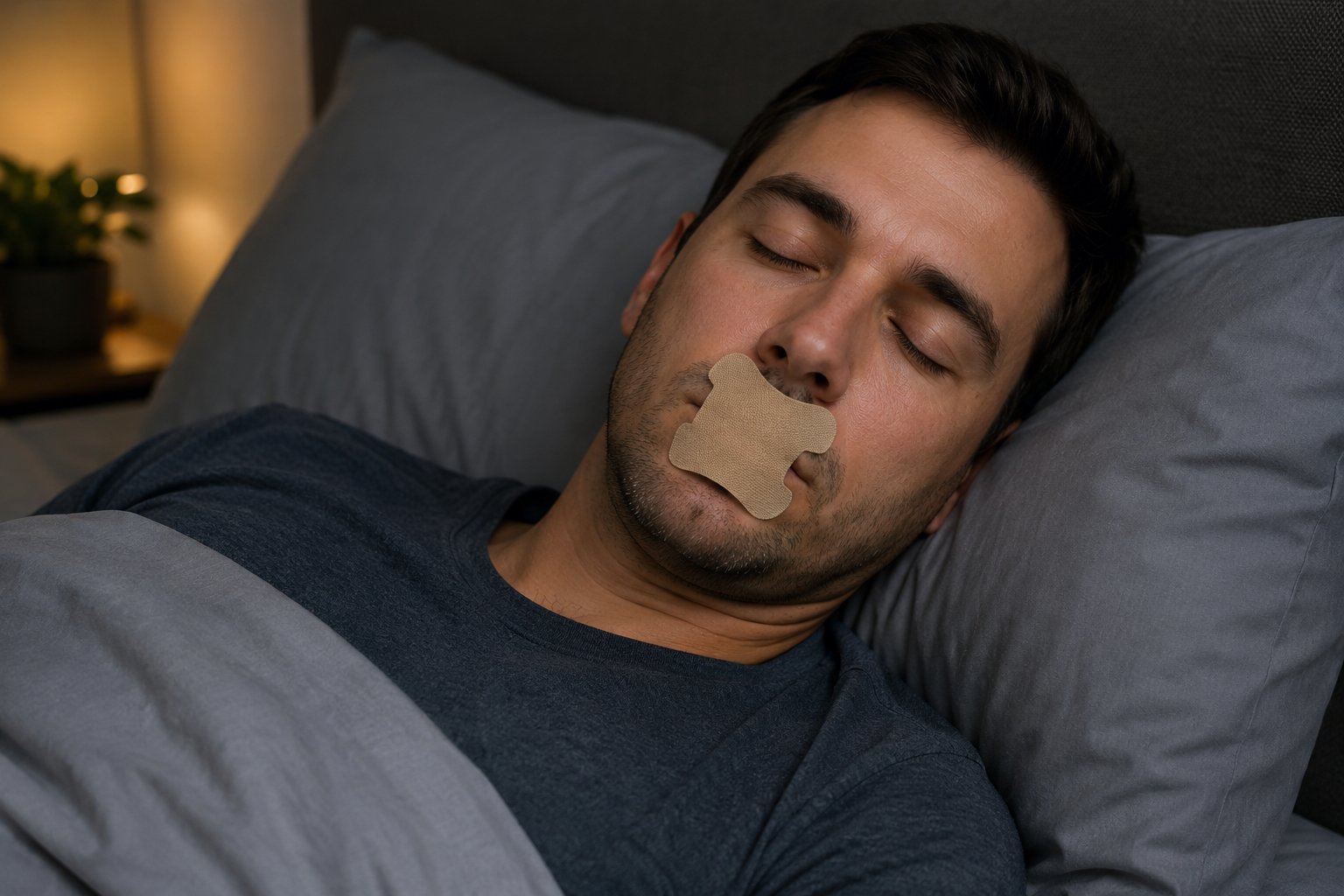
Understanding the TikTok trend and why it spread so quickly
Mouth taping for snoring has become a major wellness trend on TikTok, often promoted as a simple overnight fix for better sleep. The idea is straightforward. By taping the mouth shut, a person is forced to breathe through the nose, which is believed to reduce snoring and improve sleep quality.
This trend has been widely amplified on social media, with influencers and wellness figures claiming noticeable benefits. In viral discussions and media coverage, it has even been described as a “latest wellness craze,” with some users reporting deeper sleep after taping their mouths at night. At the same time, medical professionals have raised concerns, warning that while nasal breathing can offer benefits, the practice of sealing the mouth during sleep may carry risks that are not always discussed in online content.
Sleep specialists acknowledge that breathing through the nose may help in certain situations, as it can filter allergens, humidify air, and reduce airway irritation. However, experts also highlight that intentionally restricting the mouth during sleep can become problematic, especially if nasal breathing is blocked or compromised during the night.
Snoring itself is not always caused by mouth breathing alone. In many cases, it is linked to airway narrowing, tongue position, nasal obstruction, or even underlying conditions such as Obstructive Sleep Apnoea.
Is mouth taping actually effective for snoring
Search interest around questions like are mouth tapes effective, is mouth tape effective for snoring, and do mouth tapes work for snoring has increased significantly, but the evidence remains mixed.
There are a few reasons some people report improvement.
Breathing through the nose can filter and humidify air more effectively, which may reduce vibration in the upper airway. This can lead to a reduction in snoring volume for mild cases, especially where mouth breathing is the primary issue.
However, while some individuals may experience reduced noise, mouth taping does not consistently improve overall sleep quality or address the underlying cause of airway collapse.
It is also important to understand that reduced snoring does not automatically mean a sleep disorder has been resolved.
The risks that are often overlooked
Despite its popularity, sleep specialists highlight several risks that are frequently ignored in social media discussions.
One of the main concerns is the lack of a safety release mechanism. If nasal congestion occurs due to allergies, illness, or a deviated septum, the mouth is no longer available as a backup airway. This can lead to breathing difficulty during sleep.
Medical commentary has also pointed out that during sleep, the body may naturally need to take deeper breaths or adjust airflow. Blocking the mouth removes an important emergency breathing pathway, which is why some doctors warn it could become risky in certain situations.
There are also concerns around aspiration risk for individuals with reflux, as well as potential skin irritation from adhesives used on sensitive facial areas.
Most importantly, mouth taping may mask symptoms of sleep apnoea. This is particularly concerning because untreated sleep apnoea can contribute to daytime fatigue, cardiovascular strain, and reduced cognitive function.
This is why many professionals caution against using it as a long term snoring solution without medical guidance.
These concerns have also been highlighted in media coverage discussing the risks of the TikTok mouth taping trend, including reporting from Inside Edition in “Doctors Warn About Risks of TikTok ‘Mouth Taping’ Trend”.
Mouthpiece vs mouth tape for snoring effectiveness
When comparing mouthpiece vs mouth tape for snoring, the difference is not just in method but in mechanism.
Mouth taping is a passive approach that simply keeps the lips closed. It does not physically alter the airway structure.
A snoring mouthpiece, such as the SnoreMD device, works in a completely different way. It is a Mandibular Advancement Device that gently shifts the lower jaw forward. This helps keep the airway open by reducing collapse at the back of the throat, which is one of the most common causes of snoring.
In simple terms, mouth tape focuses on breathing behaviour, while a mouthpiece targets airway structure.
Why SnoreMD and similar mouthpieces are often considered more effective
Devices like SnoreMD are widely discussed in the category of mouthpieces for snoring and sleeping mouthpiece for snoring solutions. Their design is based on clinical principles used in sleep medicine.
A key advantage is adjustability. Many devices allow small incremental changes to jaw position, which helps users find a balance between comfort and effectiveness. This is particularly relevant when comparing adjustable mouthpiece for snoring options with one size fits all approaches like tape.
Another important factor is safety design. Many modern devices allow limited airflow even with the mouth closed, meaning the user is not completely restricted if nasal breathing becomes difficult.
Mandibular advancement devices are widely recognised in sleep studies and are commonly recommended for mild to moderate obstructive sleep apnoea. This places them in a more medically supported category compared to mouth taping, which is still considered a wellness trend rather than a treatment.
Durability also matters. A reusable mouthpiece is designed for long term use, while mouth tape is single use and requires ongoing purchase.
Safer alternatives for reducing snoring
For individuals exploring alternatives to mouth tape for snoring, sleep specialists often suggest starting with lower risk interventions.
Nasal strips or dilators can help improve airflow through the nasal passages. Side sleeping can also reduce airway collapse, particularly for positional snorers. Humidifiers may assist those who experience dryness or irritation during sleep, while saline sprays can help manage nasal congestion.
These approaches do not force a single breathing pattern and are generally considered safer first steps.
When snoring should not be ignored
Occasional snoring is common, but loud or frequent snoring combined with gasping, choking sensations, or daytime fatigue should not be dismissed.
In these cases, it is important to consult a sleep health professional. Persistent symptoms may indicate sleep apnoea, which requires proper diagnosis rather than self managed solutions like tape or over the counter devices.
How people are exploring snoring solutions today
Interest in snoring solutions continues to grow as more people look for ways to improve sleep quality. A lot of the attention is currently split between viral wellness trends and more established medical devices.
On one side, people are curious about whether mouth taping can actually help and how it fits into a safe sleep routine. On the other, there is increasing focus on oral devices designed to support the airway, especially for those dealing with persistent or disruptive snoring.
Searches tend to reflect practical concerns such as whether these methods are effective, how they compare to each other, and which options are considered more reliable for long term use.
Common areas of interest include comparisons between mouth taping and oral devices, as well as which snoring solutions are most commonly recommended for ongoing relief.
Final thoughts on mouth taping versus mouthpieces
Mouth taping may offer minor benefits for some individuals with simple mouth breathing habits, but it does not address the structural causes of most snoring.
Mouthpieces such as SnoreMD provide a more targeted approach by physically supporting the airway, which is why they are more commonly recommended in clinical settings for chronic snoring.
For anyone considering a long term solution, especially when symptoms are persistent, prioritising safety, evidence, and professional guidance is essential.