
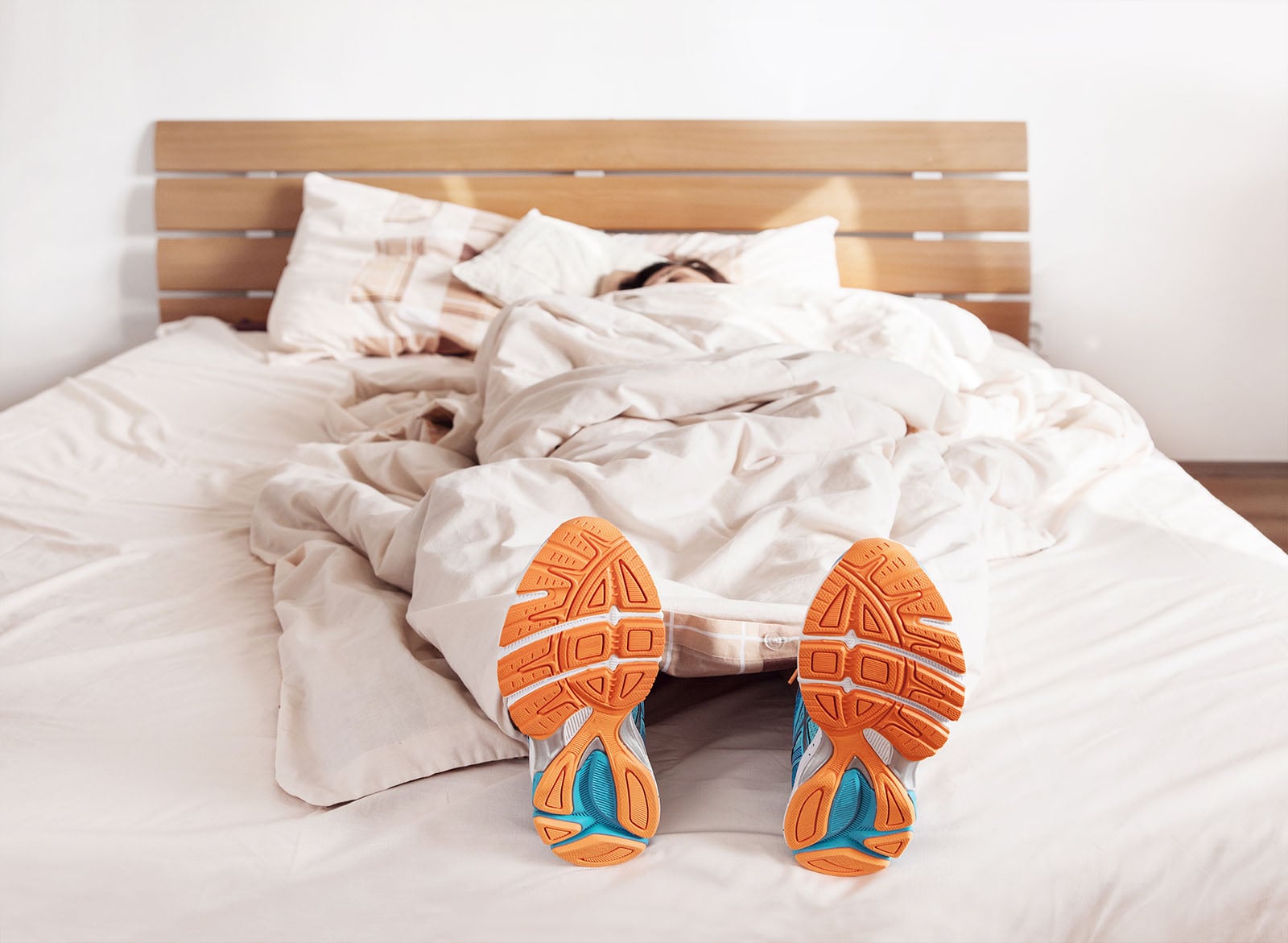
We’re all well aware that exercising regularly is essential for our physical health, and more people are now understanding how important physical activity is for maintaining psychological well-being as well. But does exercise help with snoring? What role does exercise play in terms of better, healthier sleep?
KEY INSIGHTS
- Regular exercise plays a major role in our overall health and well-being, including sleep health, and it is a powerful way to naturally regulate the sleep cycle and improve sleep quality.
- Moderate aerobic exercise increases the amount of time spent in deep sleep. It is known to help stabilise mood, relieve stress, reset the body clock, reduce symptoms of sleep disorders, and support a smooth transition to sleep.
- Exercise also improves cardiac and respiratory health, facilitates healthy weight maintenance, and thereby helps reduce snoring.
- Performing targeted exercises to strengthen the airway and the muscles of the mouth and throat can help reduce snoring and may even improve obstructive sleep apnoea.
Working out at the gym. Hiking. Cycling. Swimming. Playing a team sport. Dancing. Vigorous gardening. Taking a brisk walk in your local suburb. However you prefer to do it, getting regular exercise is great (and critical) for the health of your body and mind. It’s also a great way to optimise your sleep at night.
Can Exercise Improve My Sleep?
Scientists have found solid evidence that getting regular exercise indeed improves sleep quality and helps people fall asleep more quickly.
Moderate aerobic exercise has been found to increase the amount of slow-wave sleep (deep sleep) we get. This is the most rejuvenative, healing sleep phase. It’s also very effective for reducing stress, stabilising mood, and allowing us to relax and fall asleep more quickly and easily.
When you exercise matters. Some people prefer exercising first thing in the morning, while others feel most like moving their body in the late afternoon or evening. The body’s biological response to exercise may dictate when it’s best to get moving…
Aerobic exercise (e.g. walking, jogging, swimming, dancing, hiking, cycling, active yoga) raises the heart rate and breathing rate over a sustained period. The body releases endorphins in response; these are chemicals that can cause wakefulness for the next hour or two after exercising has stopped. Exercising also raises the body’s core temperature, which sends signals that it’s time to be awake. The declining endorphin levels and core body temperature over the next hour or so make falling asleep easier.
Most doctors agree that moderate aerobic exercise for at least 30 minutes on at least 5 days per week is not only ideal for improving and optimising your overall physical and mental health and wellbeing, but it will also improve your sleep quality.
Does Exercise Help With Snoring?
Yes! Exercise can be very powerful when it comes to managing weight and strengthening muscles.
Overweight and obesity are big contributors to snoring and developing sleep apnoea. Exercise is intrinsic (alongside a healthy diet and other strategies) to maintaining a healthy weight and losing excess fat if required.
Carrying excess weight (fat deposits) in the neck will cause the airways to narrow, and this contributes to snoring. Losing this weight helps open the airways. Exercising also builds stronger muscles – and when the throat muscles are strengthened, the tissues of the airways are less likely to collapse during sleep and cause snoring.
Regular aerobic exercise also helps clear the nasal passages. This is beneficial if snoring is caused by nasal congestion.
Targeted Exercises for Snoring
Oropharyngeal exercises are targeted mouth and throat exercises that can help improve the strength of the muscles in the face, mouth, and throat. They can also encourage the correct tongue posture and improve breathing, especially during sleep. Practised regularly, they can improve muscle tone and thereby minimise the likelihood of the narrowing and blockage of the airways that causes snoring.
Some examples include:
- Poke your tongue out as far as possible, hold it for up to 10 seconds, then relax. Repeat 10-15 times, 3 times daily. This helps strengthen and stabilise the tongue.
- Open your mouth wide, hold this position for 5 seconds, then close it. Repeat 10 times, 3 times daily, to tone the mouth and throat muscles.
- Stretch your soft palate by opening your mouth as wide as possible and saying “aaahhhh” in the back of your throat. Hold for 20 seconds, close your mouth, wait 5 seconds, and repeat 10 times.
- Place the tip of your tongue gently against the back of your top front teeth. Slowly slide your tongue back along the roof of your mouth as far as possible. Repeat 5-10 times.
- Sing! This is a fun, effective way to exercise and tone your throat muscles.
In a Nutshell…
Exercising:
- Resets and regulates the circadian rhythm and sleep-wake cycle
- Regulates sleep-related hormones, especially serotonin, melatonin, cortisol and endorphins
- Regulates body temperature
- Reduces anxiety and stress
- Regulates energy and reduces fatigue
- Improves sleep quality
Prevent Snoring with the Right Mouthguard for Sleep
Most people who snore (and who decide they’re fed up with it) are looking for a quick fix. After all, implementing lifestyle changes and doing exercises can indeed be effective, but results usually take time and do vary.
Using the right snoring mouthguard is a wise strategy that provides fast results, from minimising to even preventing snoring altogether – and many people get relief from the very first night.
SnoreMD is an incredible anti-snoring device that is worn in the mouth during sleep. Proudly Australian-made, it is the local brand of sleeping mouthguard used successfully by thousands of people all over the world, and it is widely recommended by doctors, sleep specialists, and pharmacists.
The way it works is simple: SnoreMD helps to open the airways and prevent the soft tissue vibrations that cause snoring. It achieves this by gently moving the lower jaw slightly forward. Explore how it works.
You deserve the best night’s sleep possible! Get your SnoreMD now.