
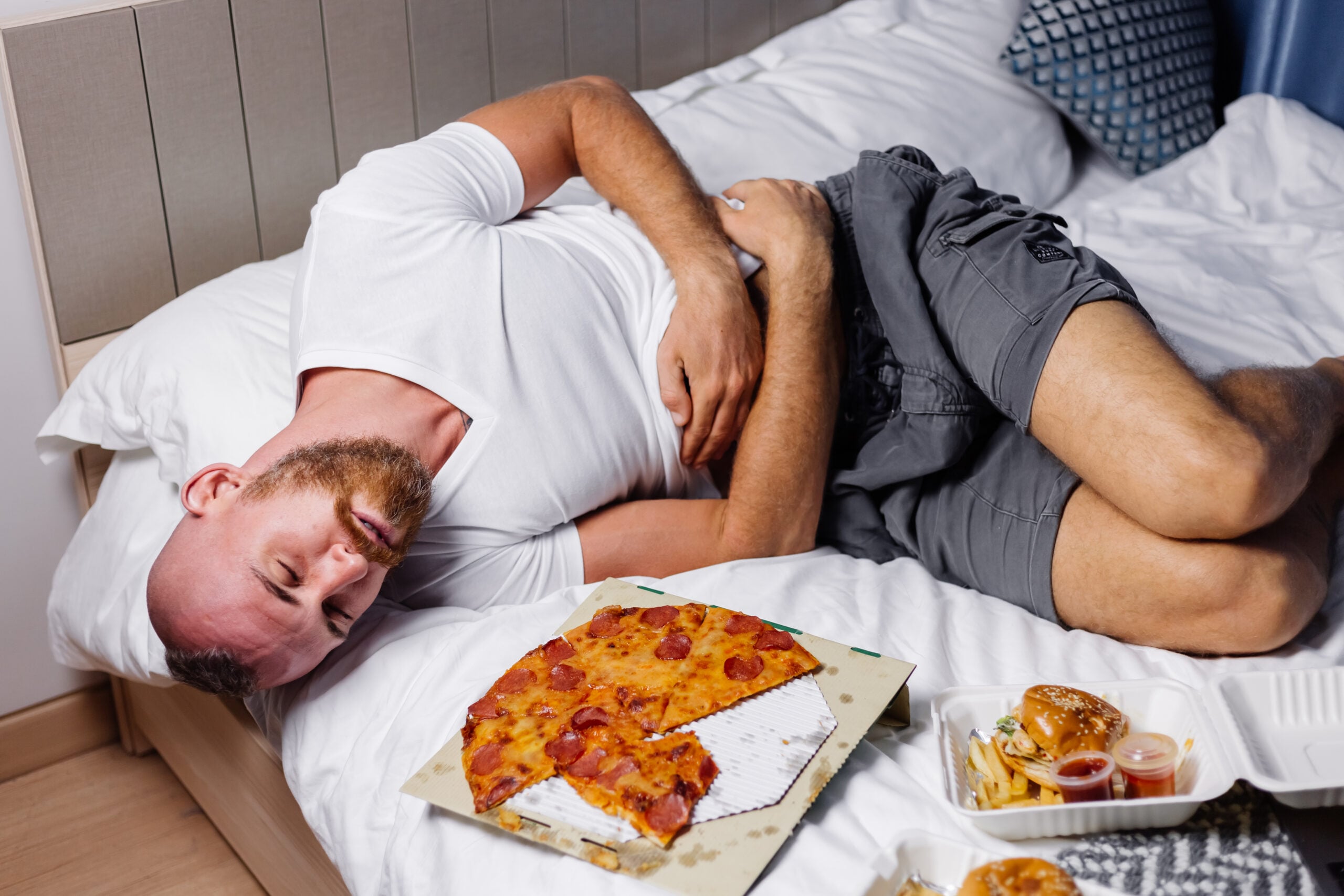
For many Australians, late-night eating isn’t just a matter of indulgence. Shift work, stress, fatigue, or even habit can make stopping a challenge. If you’ve been snoring for years, it’s possible that your nightly snacks are part of the problem.
Breaking a late-night eating pattern is rarely about willpower alone. Biological, psychological, and environmental factors all play a role. Poor sleep caused by snoring itself can make you hungrier at night, creating a self-perpetuating cycle.
Why Late-Night Eating Leads to Snoring
Hunger Hormones Gone Haywire
Lack of sleep affects ghrelin and leptin, the hormones that control hunger and fullness. Snoring from previous nights can leave you waking up hungrier, making late-night snacks irresistible.
Digestive Pressure
Eating heavy meals or sugary snacks right before bed fills the stomach, which pushes upward against the diaphragm. This limits lung expansion, increasing the chance of airway collapse and louder snoring.
Acid Reflux
Late-night food often leads to silent reflux. Stomach acid irritates the throat, causing tissues to swell. Inflamed airways vibrate more, producing louder snoring.
Inflammation and Mucus
Certain snacks like dairy, sugar, refined carbs, and alcohol create inflammation or excess mucus in the throat and nasal passages. These make the airway stickier, increasing vibration and snoring.
Long-Term Weight Effects
Frequent night-time snacking can cause gradual weight gain, especially around the neck. Extra tissue in the throat is one of the most common causes of chronic snoring and obstructive sleep apnea.
Foods to Avoid Before Bed
To keep your airway clear and quiet, avoid:
- Dairy products like ice cream, milk, and cheese
- Sugary snacks and refined carbs such as cookies and white bread
- Fatty or fried foods like pizza and burgers
- Spicy foods that trigger reflux
- Alcohol, which relaxes throat muscles and thickens mucus
Instead, opt for light, non-inflammatory snacks like a handful of nuts, a small piece of fruit, or herbal tea. Hydrating first is also a great trick, as thirst is often mistaken for hunger.
Immediate Relief for Long-Term Snorers
If habitual late-night eating has already caused persistent snoring, there are clinically recommended ways to manage it tonight.
Use a Mandibular Advancement Device
A MAD or snoring mouthguard like SnoreMD physically pulls your lower jaw forward. This creates more space in your airway, keeping the tongue and inflamed throat tissues from vibrating.
Combine with Other Temporary Measures
- Sleep Inclined: Use a wedge pillow to elevate your upper body and reduce reflux.
- Side Sleeping: Sleeping on your left side improves digestion and keeps the airway open.
- Nasal Support: Nasal strips or internal dilators like Mute keep nasal passages clear, preventing mouth breathing.
- Antacids or Alginates: Over-the-counter options neutralize stomach acid and reduce irritation.
These methods provide immediate noise reduction while you work on longer-term changes.
Long-Term Strategies
Even if you can’t completely stop late-night eating right now, you can reduce its impact on your snoring:
- Front-Load Your Day: Eat larger, protein-rich breakfasts and lunches to curb evening cravings.
- Change Your Environment: Avoid snacking in front of the TV; try reading in another room to break the cue.
- Hydration and Timing: Drink water first when cravings hit, and aim to finish your last meal at least three hours before sleep.
- Toning Airway Muscles: Mouth exercises like tongue slides, vowel sounds, and the “Tiger Shout” can strengthen soft palate tissues.
By combining these habits with a snoring mouthguard like SnoreMD, you can manage late-night eating’s effects while creating the foundation for quieter, more restorative sleep.